



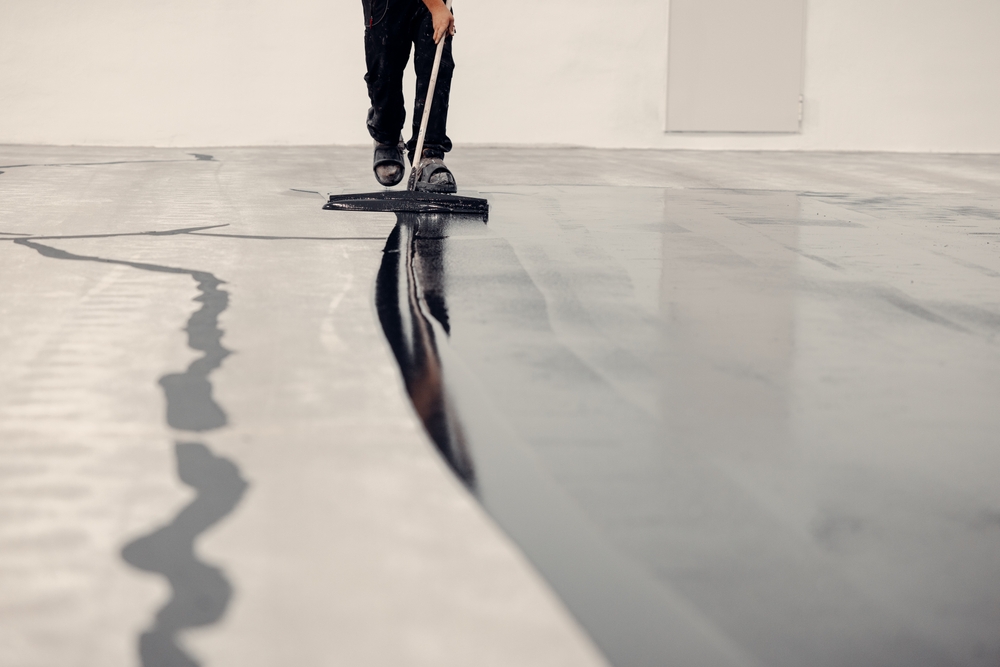
When people think about epoxy flooring, they often think about its clean appearance and glossy finish. But the real value of an epoxy coating lies beneath the surface. Epoxy is one of the most technically advanced flooring systems available for industrial and commercial environments because of the unique chemistry that gives it exceptional strength, durability, and resistance to harsh operating conditions.
However, those same scientific properties that make epoxy such a high-performance flooring solution also make it unforgiving to install. Even the highest-quality epoxy system can fail prematurely if it isn’t installed correctly.
At LACOSTA, we understand that exceptional results require both premium materials and expert craftsmanship. Here’s a closer look at why epoxy performs so well—and why professional installation makes all the difference.
The Chemistry That Makes Epoxy Different
Unlike conventional paints or sealers that simply dry as solvents evaporate, epoxy coatings undergo a chemical reaction known as cross-linking.
An epoxy flooring system consists primarily of two components:
-
Epoxy resin
-
Hardener (curing agent)
When these two components are mixed together in the proper ratio, they react chemically to form an extremely dense, interconnected polymer network.
This cross-linked molecular structure creates several important performance advantages:
-
Outstanding compressive strength
-
Exceptional adhesion to properly prepared concrete
-
Excellent resistance to chemicals
-
High abrasion resistance
-
Low permeability to moisture and contaminants
-
Long-term dimensional stability
Instead of forming a simple coating that sits on top of the floor, properly installed epoxy becomes a tightly bonded protective layer capable of handling years of industrial abuse.
Superior Mechanical Strength
Industrial facilities expose floors to constant punishment:
-
Forklift traffic
-
Heavy machinery
-
Rolling loads
-
Dropped tools
-
Impact from pallets
-
Constant foot traffic
Epoxy systems distribute these loads across their rigid polymer network, making them significantly more resistant to wear than untreated concrete or many traditional floor coatings.
The result is a floor that resists:
-
Chipping
-
Cracking
-
Surface abrasion
-
Tire wear
-
Surface erosion
This durability translates directly into longer service life and reduced maintenance costs.
Exceptional Chemical Resistance
Manufacturing facilities regularly encounter substances that can quickly deteriorate ordinary concrete.
Examples include:
-
Oils
-
Hydraulic fluids
-
Cleaning chemicals
-
Solvents
-
Mild acids
-
Alkaline cleaners
-
Process chemicals
Because cured epoxy has an extremely tight molecular structure, many chemicals cannot easily penetrate the coating.
Instead of absorbing contaminants like untreated concrete, epoxy creates a protective barrier that helps prevent:
-
Surface staining
-
Chemical attack
-
Concrete deterioration
-
Long-term structural damage
This makes epoxy particularly valuable in manufacturing plants, warehouses, laboratories, food processing facilities, and pharmaceutical environments.
Improved Safety
One often overlooked advantage of epoxy flooring is its contribution to workplace safety.
Modern epoxy systems can be customized with:
-
Slip-resistant aggregates
-
High-visibility safety striping
-
Color-coded work zones
-
Reflective finishes that improve lighting
A brighter floor can improve visibility throughout a facility while helping identify spills, debris, or other hazards more quickly.
Properly designed epoxy systems can also improve housekeeping by creating smooth, seamless surfaces that are much easier to clean than porous concrete.
Moisture Protection
Concrete may appear solid, but it’s actually highly porous.
Without protection, moisture can migrate through concrete, bringing salts and contaminants that eventually damage flooring systems.
Properly installed epoxy helps reduce moisture penetration from the surface while protecting the concrete underneath from daily exposure to water and cleaning operations.
This protection helps extend the life of both the floor and the coating.
Why Surface Preparation Is Everything
Even though epoxy has remarkable adhesive properties, it cannot bond effectively to dirty, smooth, or contaminated concrete.
In fact, surface preparation is widely considered the single most important factor determining whether an epoxy floor succeeds or fails.
Professional installers prepare concrete through methods such as:
-
Diamond grinding
-
Shot blasting
-
Crack repair
-
Joint preparation
-
Moisture testing
-
Contaminant removal
These processes create the proper concrete surface profile (CSP) required for maximum mechanical adhesion.
Skipping or rushing this step often results in:
-
Delamination
-
Bubbling
-
Peeling
-
Premature coating failure
No coating—regardless of quality—can compensate for poor surface preparation.
Precision Matters During Installation
Installing epoxy isn’t simply a matter of rolling paint onto concrete.
Professionally installed systems require careful control of numerous variables, including:
Mixing Ratios
Epoxy components must be measured precisely.
Improper mixing can leave uncured material within the coating, resulting in soft spots, poor adhesion, or reduced chemical resistance.
Pot Life
Once mixed, epoxy begins curing immediately.
Installers have a limited working window before the material becomes unusable.
Experienced crews understand exactly how environmental conditions affect working time and adjust installation procedures accordingly.
Temperature and Humidity
Environmental conditions dramatically affect curing behavior.
Temperatures that are too cold can slow curing.
Temperatures that are too warm can shorten working time.
High humidity can interfere with curing and create surface defects.
Professional installers continuously monitor these variables to ensure optimal results.
Film Thickness
Different facilities require different coating thicknesses.
Too thin, and the floor may wear prematurely.
Too thick, and curing problems or cracking can occur.
Experienced installers apply the proper system based on traffic loads, chemical exposure, and operational requirements.
Matching the Right Epoxy System to the Environment
Not every epoxy flooring system is designed for every application.
Industrial facilities may require:
-
Self-leveling epoxy
-
Mortar epoxy systems
-
High-build coatings
-
Static-control systems
-
Chemical-resistant formulations
-
Thermal shock-resistant systems
-
Decorative flake systems
Selecting the wrong product can significantly reduce floor life.
At LACOSTA, we evaluate each facility’s operational demands before recommending a flooring system, ensuring the finished floor performs as expected under real-world conditions.
Minimizing Downtime Through Experience
One of the biggest concerns during any flooring project is operational disruption.
Experienced installation teams understand how to coordinate projects around production schedules, staged work areas, and shutdown periods to minimize downtime.
Efficient planning, proper sequencing, and experienced crews help facilities return to full operation faster without compromising installation quality.
Why Choose LACOSTA for Epoxy Flooring?
An epoxy floor is only as good as the installation behind it.
At LACOSTA, we combine technical expertise, industrial experience, and proven installation methods to deliver flooring systems built for demanding environments. Our teams understand the science behind epoxy coatings and the precision required to install them correctly—from meticulous surface preparation to final curing.
Whether you’re upgrading a manufacturing plant, warehouse, food processing facility, pharmaceutical operation, or commercial space, LACOSTA provides flooring solutions designed for long-term performance, improved safety, and lasting durability.
When properly engineered and professionally installed, epoxy isn’t simply a floor coating—it’s an investment in the reliability, appearance, and longevity of your facility.